
Recommended Services


Supported Scripts
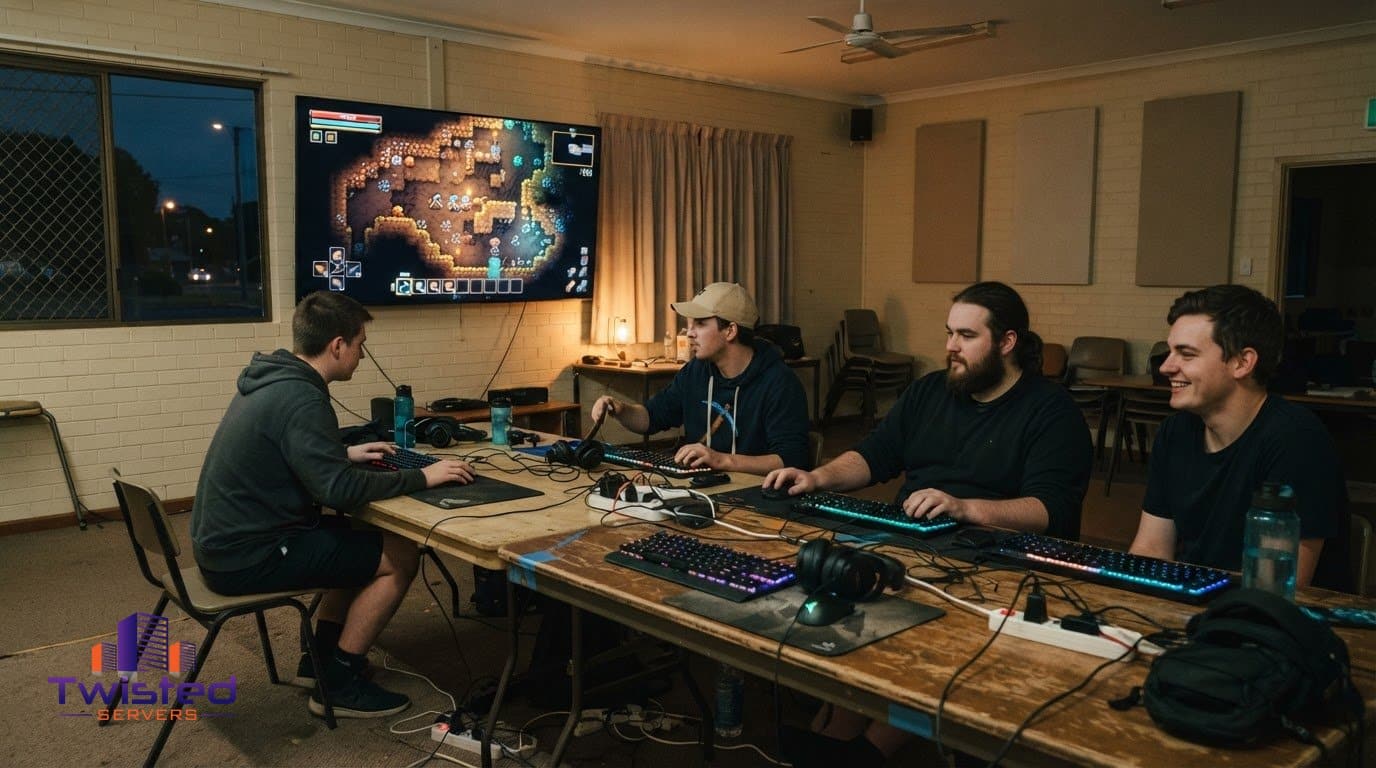

The strongest Core Keeper server isn’t necessarily the one with the biggest hardware allocation. For Core Keeper server hosting in Australia, the right choice depends on how your group plays, the resources the world needs and the support available when something goes wrong.
It’s also worth distinguishing a player-hosted world from a dedicated server. In a player-hosted world, the host must be in the game for others to play. A dedicated server keeps the world hosted separately, so your group can play without relying on one player to host each session.
This guide explains what to compare across Australian Core Keeper hosting plans: hardware, server resources, support and local infrastructure. You’ll learn how to weigh those factors for your group and what to look for in a plan, so you can make a clear, informed choice without getting lost in technical jargon.
Key Takeaways
- Match server resources to your group’s play style, world activity and storage needs rather than choosing a plan by hardware labels alone.
- Compare setup, support, file access and mod handling to understand how the provider will manage your server.
- Choose an Australian server location with your players’ locations and network routes in mind; local hosting can reduce latency for Australian players.
- Core Keeper supports up to eight players per server, so focus on a plan suited to your group rather than capacity beyond the game’s limit.
- Check how updates and backups fit into the hosting arrangement to help keep your shared world accessible and protected.
Choosing a provider and support options
Choose an Australian host that clearly explains setup, mod handling, backups and file access before you commit. Review the written terms for uptime, support availability and refunds rather than assuming every plan offers the same service.
Server Setup and Customer Support
A clear setup process should provide connection details and leave the server ready for your group. Ask how the provider handles Core Keeper updates and what information you need to supply, such as preferred world settings. A useful support process explains how to report connection or configuration issues and which channels are available, including whether support is available around the clock.
Check mod support in detail. Core Keeper mods are installed on the server manually, and most require matching versions on the server and players’ computers. Look for a clear explanation of whether the host assists with installation or troubleshooting, rather than assuming mods work automatically.
File access determines how much control you have over server files, configuration and world data. Look for a documented method to view or manage those files, plus a clear explanation of which changes the provider handles. For example, full control may matter if your group changes configuration, while a managed setup may suit players who prefer provider assistance. A separate environment may be relevant for other workloads; see VPS hosting.
Uptime and Refund Policies
Uptime terms are easier to compare when they define downtime, explain how it is measured and list any excluded maintenance periods. A stated guarantee alone doesn’t show how interruptions are recorded or what remedy applies. Compare the written terms, not just a headline percentage.
Support policies also differ by channel and availability. A 24/7 label should specify whether it means access to a support team at any hour, or simply that requests can be submitted then. Refund policies are separate: read the eligibility period, exclusions and request process before ordering, since these conditions can vary between providers.
- Confirm the setup process and required information.
- Compare mod installation help and file access.
- Read uptime, support and refund terms side by side.
- Check how backups are made and restored, including who handles recovery.
A dedicated Core Keeper server lets players join the same world from Steam, Epic, GOG and the Microsoft Store. The server software still needs to stay current: players on a newer version can’t join until the server is updated. Include update handling in your comparison, especially if your group uses mods.
Server RAM, vCPU and storage options
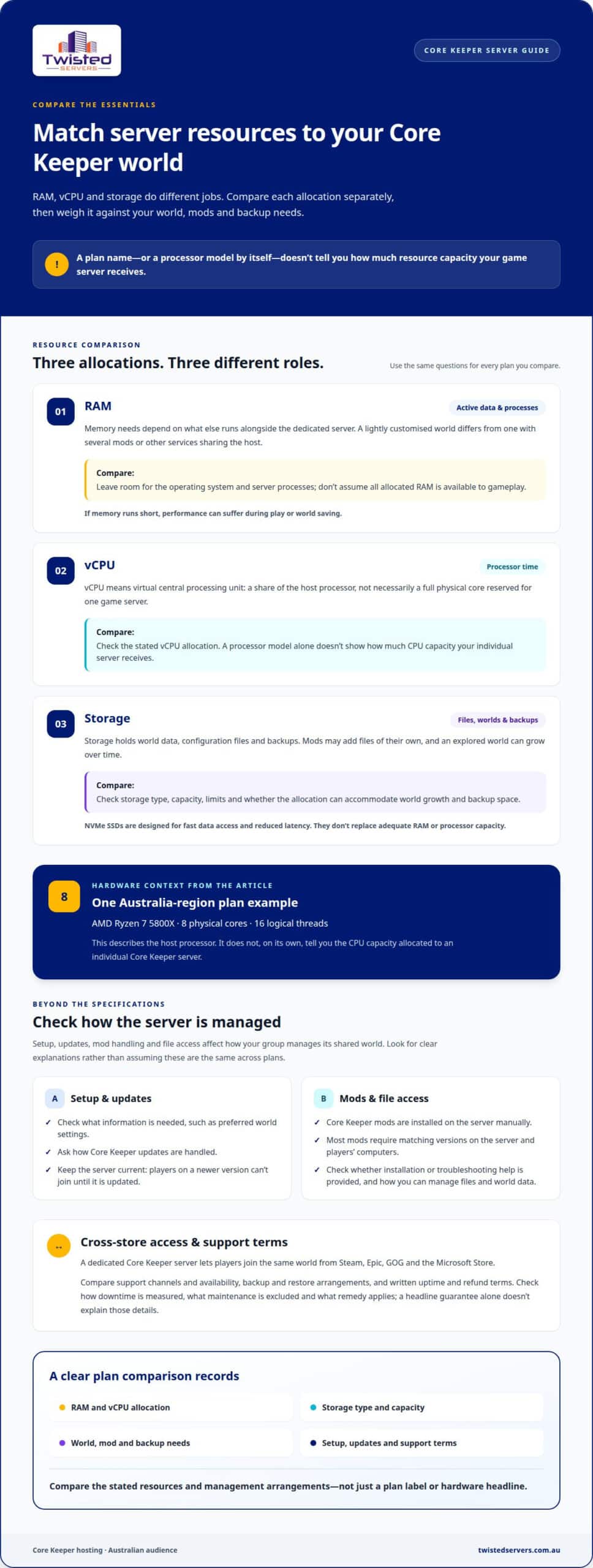
RAM, vCPU and storage each serve a different role in a Core Keeper server. RAM holds active processes and data, while vCPU allocation determines how much processor time the game server can use. Storage holds server files, world data and backups. Compare these resources separately for a clearer picture than a plan name alone provides.
Memory needs depend on what else runs alongside the dedicated server. A lightly customised world has different demands from one with several mods or other services sharing the host. Leave room for the operating system and server processes instead of assuming all allocated RAM is available to gameplay. If memory runs short, performance can suffer during play or world saving.
vCPU means virtual central processing unit. It represents a share of the host processor, not necessarily a full physical core reserved for one game server. One Australia-region hosting plan uses an AMD Ryzen 7 5800X with 8 physical cores and 16 logical threads. That example gives useful hardware context, but the processor name alone doesn’t show how much CPU capacity an individual game server receives.
Storage matters as your group explores and mines through a world. The server needs space for world data, configuration files and backups, while mods may add files of their own. Check how the host manages storage limits and whether the allocation can accommodate a growing world. Factor in backup space too, because backups need storage of their own.
NVMe SSDs are designed for fast data access and reduced latency. For a game server, this can support file loading and storage operations, but it doesn’t replace adequate RAM or processor capacity. Compare storage type and capacity, and distinguish an NVMe SSD from a plan description that only says “SSD”.
Tax wording is separate from hardware specifications. In an Australian comparison, keep tax details in the billing summary distinct from the plan’s RAM, vCPU and storage allocation. Assess storage expansion separately from the included capacity too: neither tax labels nor extra storage options indicate how much memory or processor time the game server receives.
For a practical comparison, record each plan’s stated RAM, vCPU allocation, storage type and capacity. Match those details to your world, mod use and backup needs. A dedicated server with larger headline specifications isn’t automatically the right fit if its available resources and storage arrangements don’t suit your Core Keeper setup.
Core Keeper server hosting plans
Compare plans by billing period, resource allocation and the server management included. For an Australian group exploring underground, the right fit depends on play frequency and who needs access.
Monthly Hosting Pricing
A monthly plan provides a regular billing period for a world friends use over time. It suits groups that want an ongoing server instead of arranging hosting for individual sessions. Compare what each plan includes, such as allocated resources, backups and help with server updates, not just the billing interval.
Hourly billing, where available, charges for time used rather than a recurring monthly period. It may suit a short event, but an always-on world needs a predictable billing arrangement. Before comparing plans, check how the host defines active time, handles server shutdowns and presents tax information.
For a fair comparison, list the billing period beside the plan’s included resources and management. A monthly label alone doesn’t tell you whether backups, file access or updates are included. Keep those details separate from optional additions, such as extra storage, so the plan’s scope is clear before you choose.
Player Capacity
Core Keeper supports a maximum of eight players per server. That limit matters more than a plan’s broad capacity claims: extra hardware can’t raise the game’s player cap. For a regular group of friends, choose resources for the world and server workload rather than capacity beyond eight players.
A plan’s player guidance can help you compare resource allocations, but consider it alongside Core Keeper’s player limit. A server designed for a smaller group may suit a quiet shared world, while a busy world with active exploration and mining may place different demands on its resources. Focus on how your group expects to play, not only the number of people invited.
Before choosing a plan, note how often the world will run, who will join and whether you’ll use mods. Compare those needs with the stated resources, backup arrangements and billing period. If your group’s habits change, check whether the plan can accommodate growing storage needs and activity while staying within the game’s eight-player maximum.
These criteria make plan comparisons more useful than a headline label. A monthly arrangement may suit a persistent world, while usage-based billing may fit a limited event. The practical choice depends on how your group plays, what management is included and whether the server resources match the world’s ongoing demands.
Core Keeper server hosting in Australia
Yes, an Australian hosting provider can run a Core Keeper dedicated server for your group. The server needs a compatible environment and a network connection players can reach. Hosting the server outside an individual player’s home network can simplify access for a group using different internet providers or routers.
Location is one factor in latency, the delay between a player’s action and the server’s response. Traffic travelling a shorter physical distance may have less delay than traffic travelling overseas, but distance alone doesn’t determine ping. A player’s ISP, network routing and connection quality also matter. Players in different parts of Australia may reach the same server over different routes.
Consider how the server location relates to where your group usually plays. If most players connect from one area, a location closer to them may reduce network distance. If your players are spread across Australia, no single location may be closest to everyone. Individual routes and internet providers can produce different results, even when players join the same server.
Port forwarding mainly matters when someone hosts from home. The router must direct incoming game traffic to the host computer, and the home network must allow that traffic through. With a hosted server, players connect to the hosting environment rather than through the host’s personal router. The provider’s network configuration and the server’s connection details then matter.
CGNAT can complicate home hosting because it places a provider-managed address layer between a customer’s router and the public internet. This can prevent ordinary incoming connections from reaching the home host. A separately hosted server avoids relying on a player’s home router and CGNAT arrangement. This distinction can help identify whether a connection issue is at home or with the hosted server.
For a group spread across Australia, compare server location, connection method and network support as separate factors. Latency varies by player, so one person’s ping won’t necessarily represent the whole group. Hosting is especially useful when no single player should have to keep a home computer and router available for everyone else. These network considerations help you decide whether the arrangement suits your group.
Yes. You can use an Australian hosting provider or host from home if your server environment is compatible and your router and network allow incoming game traffic. CGNAT can interfere with home hosting. The section provides no basis for estimating costs.
How many players can Australian Core Keeper hosting plans support?
Core Keeper’s per-world player limit sets the ceiling, regardless of a hosting plan’s advertised capacity. A plan description may refer to its resources or suggested group size, but that doesn’t change what the game allows. Treat the game’s limit and the host’s plan capacity as separate details when assessing a server for your community.
Plan capacity is most useful as a guide to the workload the host expects its resources to handle. Ask what a stated player figure means: a technical limit, a recommendation or an estimate based on a particular setup. The distinction matters if your group uses a modified world or expects busy sessions, as those conditions can place different demands on the server.
Community size involves more than the number of people who play regularly. A gaming group, for example, may have members who join at different times and occasional guests for planned sessions. Share this pattern when discussing hosting needs. It helps distinguish the full community roster from the number likely to play together in a typical session.
- Regular sessions: Describe how your group usually plays and which members need access.
- Special events: Include expected attendance for organised play nights or community gatherings.
- Modified worlds: Mention planned changes that could affect the server’s workload.
Plan labels don’t explain what happens when a server reaches its practical capacity. Ask how that limit is presented to players and what they’ll experience if a session is full. Clear wording helps organisers set expectations before inviting people, especially when regular sessions and special events have different attendance patterns.
For a useful comparison, put the game’s limit beside each plan’s capacity guidance and your group’s expected session pattern. Then assess whether the provider’s explanation matches your intended use. This helps you avoid choosing based solely on a large advertised slot figure and keeps the decision grounded in Core Keeper’s multiplayer rules and your community’s needs.
A basic Core Keeper server plan might support 5-10 players, while more advanced plans can handle dozens of players simultaneously; treat these figures as estimates, not guarantees.
Twisted Servers
Twisted Servers offers Game Server Hosting, VPS Hosting and Dedicated Server Hosting. These options suit different needs: choose based on whether you need game-focused hosting or a broader server environment. The comparisons in this guide can help define the resources, access and support your multiplayer setup requires.
For game hosting, start by identifying what matters to your group: the game and server software, how many players join together, mod requirements and how you want files managed. These details show what your hosting arrangement needs to accommodate. They also help distinguish game server hosting from a general-purpose server, where the user may manage more of the environment.
VPS Hosting and Dedicated Server Hosting suit different technical needs. A VPS provides a virtual server environment, while dedicated server hosting provides a dedicated server. Neither is automatically equivalent to a game-specific hosting plan. Consider how much server administration you want to handle and whether the intended game software is supported in your chosen setup.
Twisted Servers also offers Web Hosting, which serves a different purpose from hosting a multiplayer game server. Keeping these service categories distinct helps you match your requirements with the right type of hosting instead of choosing by name alone.
Before choosing an arrangement, gather the details that affect suitability: the game and server software, expected player activity, mod plans and the file access you need. These requirements provide a clear starting point for choosing hosting and help avoid assumptions about specifications or compatibility.
If you’d like to discuss your hosting requirements, contact Twisted Servers.
Frequently Asked Questions
Which game server hosts offer Core Keeper hosting in Australia?
Australian providers can host Core Keeper when their service supports its dedicated server software. For Core Keeper server hosting in Australia, look for a host that explains setup, updates and access to world files. A general VPS or dedicated server may also run game server software, but that requires a suitable configuration. Compare the provider’s Core Keeper-specific service details with the setup your group needs.
Where are Australian Core Keeper server locations, and how do latency and ping compare?
Australian server locations vary by provider, and the best fit depends on where your players connect from. With Core Keeper server hosting in Australia, a server closer to your group may reduce the distance traffic travels compared with a distant overseas location. Ping also depends on each player’s ISP and network routing, so a local server can’t guarantee a particular result. Consider where your group plays when comparing locations.
What RAM, CPU, and storage does a Core Keeper server need for different player counts?
No single resource allocation suits every Core Keeper world. Player count matters, but world activity, mods and other processes also affect demand. Compare RAM, CPU allocation and storage, including space for world files and backups. A small group with an unmodded world has different needs from a busier, modified setup, so match resources to how your players expect to use the server.
How does a provider set up a Core Keeper dedicated server in Australia, and how do you join it?
The provider prepares compatible dedicated server software, starts the server and supplies connection details, including its Game ID. Steam players can join using that Game ID. Players using Steam, Epic, GOG and the Microsoft Store can join the same dedicated server world. The server and players need compatible game versions; if the server is behind, update it before players on a newer version can connect.
How do Australian Core Keeper server hosts compare on uptime, support, and refund policies?
Compare written uptime terms, including how downtime is measured and which maintenance periods are excluded. Check support availability by channel and whether 24/7 means a team is available at any hour, then review each provider’s refund eligibility, exclusions and request process.
Disclaimer
Game titles, trademarks, logos and related assets are the property of their respective owners. Twisted Servers is an independent hosting provider and is not affiliated with or endorsed by the developers or publishers of the games mentioned unless otherwise stated. Information is provided as a general guide and may change as games, software and hosting services are updated.

